

Key Takeaways
- A mix of emotions during this transition is completely normal for families and loved ones alike.
- Starting conversations early and visiting the community together can ease anxiety before move-in day.
- Familiar personal items help loved ones feel comfortable and settled in their new space.
- Staying involved after the move supports your loved one’s emotional well-being.
- Adjustment takes time, and memory care communities offer ongoing support for the whole family.
Why the Move to Memory Care Feels So Big
Moving a loved one into memory care is one of the most emotionally layered decisions a family can face. You might feel relief, grief, love, and uncertainty all at once, and every single one of those feelings is valid. Your loved one may feel unsettled too, especially when so much is changing around them at the same time.
The good news is that with the right preparation and support, this transition can feel far more manageable than you might expect. Memory care communities are designed with your loved one’s comfort in mind, and families who take thoughtful steps early on often find that the adjustment period is smoother for everyone involved. If you’re wondering when full-time memory care becomes necessary, and how to make the move easier, we are here to help. You don’t have to figure this out on your own.
How to Prepare Your Loved One Before Move-In Day
Start the Conversation Early
Bringing up the idea of memory care gradually, rather than all at once, gives your loved one time to process the change. Listen openly, and let them share any worries without rushing to fix everything right away. Sometimes, just feeling heard makes a big difference. For guidance on approaching these conversations, these tips for talking to your loved one about senior living can help you feel more prepared.
When possible, involve your loved one in decisions, such as which personal items to bring or how their new space might be arranged. Even small choices can help them feel respected and in control. Reassurance throughout these conversations goes a long way toward building trust in the process.
Visit the Community Together First
Touring the memory care community with your loved one before move-in day helps take some of the mystery out of the change. When familiar faces, warm common areas, and friendly staff become recognizable ahead of time, the transition can feel far less overwhelming. Seeing the space together also gives you both a chance to ask questions in a low-pressure setting. You can often explore the community’s floor plans and gallery to get a feel for the community before your visit.
Another helpful option is a respite care stay, which allows your loved one to spend a short time in the community before committing to a permanent move. This kind of short-term care can ease the shift by turning an unfamiliar place into a comfortable one, step by step.
Ways to Make Their New Space Feel Like Home
Familiar surroundings and personal objects play a meaningful role in comfort for those living with dementia. A few familiar touches can transform a new room into a comforting space. Consider bringing a favorite blanket, a well-loved photo album, or a piece of furniture your loved one has had for years. These items aren’t just decorative. They can actually support memory recall and provide a sense of calm.
Think about the small things that bring your loved one comfort on an ordinary day. A framed photo from a family vacation, a favorite throw pillow, or a familiar lamp can make the new space feel personal and warm. The goal is to surround them with pieces of the life they know and love.
How to Stay Connected and Involved After the Move
Keep Communication Open with the Care Team
The care team at a memory care community can provide much more personalized support when they know your loved one well. Share details about their daily routines, favorite hobbies, comfort foods, and things that tend to soothe them when they’re anxious. The more the team knows, the better they can tailor each day to your loved one’s needs.
Regular check-ins with staff also help you stay informed about how your loved one is adjusting. Don’t hesitate to ask questions or share updates as things evolve at home or within the community. Open communication between families and care teams creates a true partnership.
Stay Present in Your Loved One’s Daily Life
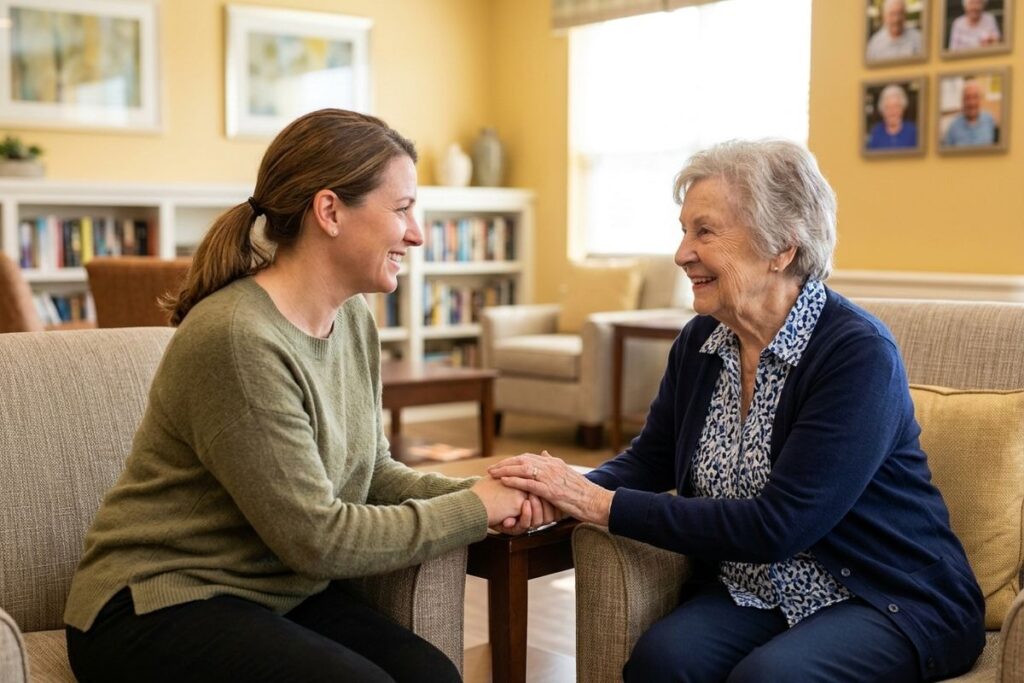
Your presence still matters deeply, even after the move. Regular visits, sharing a meal together, or joining in on an engaging community activity can strengthen your bond and remind your loved one that they’re surrounded by love. Family involvement plays a meaningful role in emotional well-being, especially during the early weeks of a transition.
You don’t need to visit for hours at a time to make an impact. Even a short, consistent visit each week gives your loved one something warm to look forward to and helps them feel connected to the people who matter most.
What Families Can Expect Along the Way
It’s worth knowing that adjustment takes time, and that’s completely normal. There may be days that feel harder than others, and small setbacks are simply part of the process, not a sign that anything has gone wrong. Patience and consistency from your family can make a real difference during those moments.
Senior living communities that specialize in memory care also offer ongoing support for families, not just residents. Whether you need guidance, reassurance, or simply someone to talk to, our team at All American Assisted Living at Washington Township is here to walk alongside you every step of the way. You’re always welcome to reach out, ask questions, and schedule a tour to see the community for yourself.