
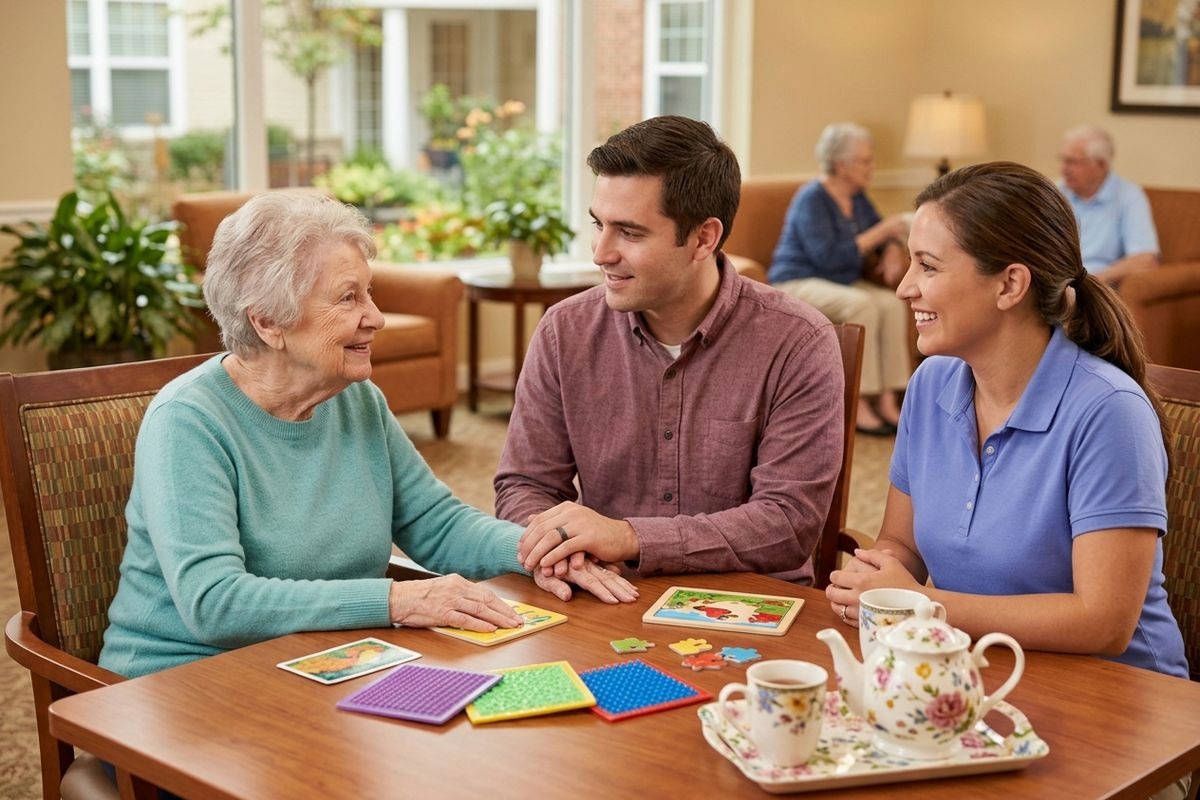
An older adult smiles as they sit with their visiting family members in a memory care community.
Key Takeaways
- Look for staff with dementia-specific training and a low resident-to-caregiver ratio
- The environment should feel warm, calm, and supportive of independence
- Meaningful daily activities and consistent programming matter for your loved one’s well-being
- Family communication and open-door policies are signs of a trustworthy community
- Trust your instincts when you tour, and come prepared with thoughtful questions
Find the Right Memory Care Community for Your Loved One
Choosing memory care for someone you love is one of the most personal decisions a family can make. You want to feel confident that your loved one will be safe, respected, and genuinely cared for, not just looked after. Knowing where to begin can feel overwhelming.
The good news is that the right memory care community will show you what it offers when you know what to look for.
From the way staff members greet residents to the smell of a freshly cooked meal, the details tell the whole story. If you’re wondering when full-time memory care becomes necessary, it helps to understand exactly what a quality community looks like.
What to Look for in Staff and Care
Dementia-Specific Training
Not all care is the same, and memory care calls for a particular kind of patience, skill, and understanding. When you’re touring a community, ask directly about the training staff receive for dementia care. You want to hear about hands-on experience, not just general orientation.
Familiar faces matter more than you might think. When your loved one sees the same caregiver day after day, it builds a sense of safety and routine. Consistency can make a real difference in how comfortable and settled they feel.
Staff-to-Resident Ratio
Pay attention to how many residents each caregiver is responsible for. A lower ratio means more time, more attention, and more personalized support for your loved one. It’s one of those details that directly shape everyday life inside the community.
During your tour, watch how staff interact with residents in real time. Are they making eye contact, speaking gently, and responding with patience? Those small moments reveal a lot about the culture of care in that community.
Understanding how dementia affects communication and what effective, compassionate communication strategies look like can help you see what truly sets a trained team apart.
How the Environment Should Feel
A Comfortable, Homelike Setting
Walk through the common spaces and notice how they make you feel. Warm lighting, soft colors, and inviting furniture create a sense of calm that matters deeply for people living with memory loss. If it feels cozy and welcoming to you, it likely feels that way to residents, too.
Look at the residents themselves. Are they engaged, relaxed, and connected to what’s happening around them? A community where residents seem at ease is one where daily life feels meaningful, not just managed.
You can get a feel for the space before you even visit by browsing the community’s floor plans and photos.
Safety Without Feeling Restrictive
Security features are important, but the design of a memory care community should support your loved one’s freedom, not limit it.
Secure outdoor spaces where residents can enjoy fresh air and gentle movement are a wonderful sign. When someone can take a walk outside without risk, that’s independence being honored.
The layout should make it easy for residents to move around comfortably on their own. Good design quietly supports independence without drawing attention to limitations.
Memory care communities design environments to help reduce wandering risks while still keeping life feeling open and free.

A group of seniors shares a laugh as they sit together in a bright, welcoming common area in a memory care community.
Activities, Engagement, and Daily Life
Meaningful Daily Programs
A thoughtful activity program does more than fill time. Music, gentle movement, and social connection naturally built into each day can lift mood, spark memory, and bring real joy. Ask to see a sample schedule and look for variety and purpose in what’s offered.
Activities should be adapted to different ability levels. Your loved one deserves programming that meets them where they are, not a one-size-fits-all approach that leaves some residents behind. Take a look at the weekly events and programs that a thoughtful community can offer.
Weekend and Evening Schedules
Ask whether the programming continues through weekends and evenings, or if activities are mostly weekday-focused. Consistent engagement throughout the week supports a stable, comforting routine for residents. A lively Tuesday shouldn’t mean a quiet Sunday.
Some residents keep unconventional hours, so it’s worth asking how the community supports those who are awake earlier or later than most. Flexible care shows that the community is truly paying attention to individual needs.
Family Communication and Involvement
You shouldn’t have to wonder how your loved one is doing. Ask how often families receive updates and through what channels. A community that communicates openly values your involvement and understands how much you care.
Look for open-door visit policies and family events that bring everyone together. When families feel welcome, it strengthens the whole experience for residents.
Asking whether support groups or educational resources are available for family members navigating this journey. Understanding what kind of care someone with dementia needs can help you ask helpful questions and feel more prepared.
Trust Your Instincts on the Tour
The moment you walk through the door, take in everything around you. Does the space feel alive and warm? Do staff members smile at residents as they pass? Your gut reaction to those first few minutes is worth listening to.
Notice not just what staff says, but how they say it. Kindness, patience, and genuine affection for residents can’t be faked for long.
Questions Worth Asking Before You Decide
Before making your decision, come prepared with questions that get to the heart of daily life. A few worth asking include:
- How are care plans created and updated over time?
- Can your loved one personalize their living space?
- Is there a waiting list, and what are the next steps to move forward?
At All American Assisted Living at Washington Township, memory care is built around compassion, connection, and personalized support.
Schedule a tour today and see firsthand what a warm, engaging senior living community can look like for your loved one.