

Key Takeaways
- Cognitive stimulation therapy uses fun, guided activities that gently engage thinking and memory.
- Sessions usually happen in small groups, though one-on-one options exist too.
- It’s often suggested for people living with mild to moderate dementia.
- Reported benefits include small short-term boosts in thinking, communication, and mood.
- You can support similar activities at home with games, photos, music, and simple recipes.
- Memory care communities build this kind of programming into daily life.
A Closer Look at Cognitive Stimulation Therapy
You’ve probably noticed that certain moments light your loved one up. It might be a favorite song from decades ago or a photo of their first car. Our team at All American Assisted Living at Washington Township knows how significant these small moments are. And that’s why we’d like to introduce to you the structured approach that is built around them.
Cognitive stimulation therapy is a set of guided, enjoyable activities to gently engage thinking and memory. It’s designed for people living with mild to moderate dementia. And sessions are usually held in small groups. The therapy should feel joyful, like an afternoon spent doing something worthwhile with people who understand. This mirrors the care a loved one with dementia needs as their days change.
How Cognitive Stimulation Therapy Helps Your Loved One
The goal here isn’t a dramatic transformation. It’s a series of small, meaningful lifts that add up to better days.
People taking part often show small short-term boosts in thinking and memory. Many also communicate more comfortably and fluently. The therapy affects emotional well-being too. Some seniors see slight improvements in mood and in the everyday activities that fill their day.
Why the Social Side Matters in Cognitive Stimulation Therapy
Having peers who validate similar life experiences can be comforting. That’s how stories and laughter get shared. Someone remembers a summer job. And suddenly three other people are chiming in with their own.
That shared experience cuts through isolation. Seeing a loved one reconnect socially is often the first change families notice.
What Research Suggests So Far
The potential benefits reported so far are mild and temporary. As compared to other therapies, cognitive stimulation therapy is a gentle approach. Your loved one gets an enjoyable afternoon either way. And there’s a chance they get a little more.
Common Activities in a Session
Sessions are built around things people genuinely like doing. There’s no clipboard, no quiz, no pressure to perform.
You might see activities like these:
- Word games, puzzles, trivia, and bingo
- Music sessions, art projects, and singing along to old favorites
- Baking simple recipes or tending a garden bed
- Conversations about past memories and current events
Think the smell of banana bread in the oven or the feel of soil brushing against the skin. Those are experiences that a worksheet could never replicate. And that’s the point. Activities like these engage the senses and invite participation without demanding it.
Session Length and Frequency
Most sessions run around 45 to 60 minutes. That’s long enough to settle in and enjoy the company. But that’s also short enough to end while everyone is still enjoying themselves.
Groups often meet twice weekly over the course of several weeks. Slowly, the rhythm becomes something to look forward to.
Ways to Support Cognitive Stimulation at Home
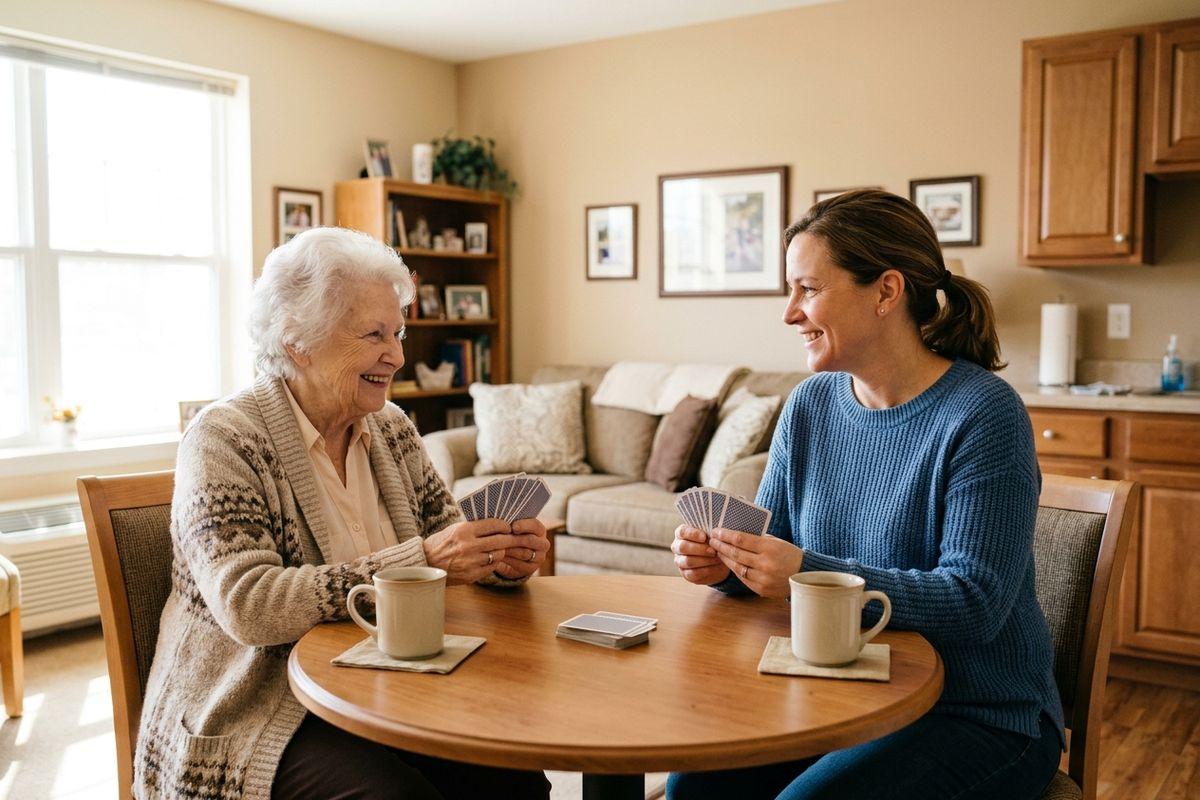
While cognitive stimulation therapies are done by professionals, you yourself can still introduce gentle stimulation into daily life. A deck of cards and 30 minutes of your attention go a long way.
Here are a few ideas worth trying:
- Card and board games the whole family can join
- Photo albums, with time to talk through who’s who
- Favorite music from their younger years playing during dinner prep
- Simple recipes where they stir, measure, or taste along the way
Match the difficulty to what feels comfortable. And let your loved one choose the activity when possible. Games and puzzles like these can also improve working memory over time.
Signs an Activity Fits Well
Watch their face and body language, not the outcome of the game. Look for relaxed shoulders, a smile, and a wish to keep going when the round ends.
Those are your green lights. If your loved one appears frustrated, switch to a favorite song or a photo album instead. There’s always another option. The goal is connection rather than a correct answer.
See It in Action at All American Assisted Living at Washington Township
Daily programming with this spirit built in is part of life at All American Assisted Living at Washington Township. In our community, trained team members lead activities. And our personalized care plans help each resident take part at a pace that suits them.
We offer senior living options such as assisted living, memory care, or respite care. Families are always welcome to come see our community firsthand. Schedule a tour today, join one of our many activities, and picture your loved one in the middle of it all. Our team would love to meet you.